Opal
Opal is a mineral . The color of the stone ranges from clear to white, gray, red, orange, yellow, green, blue, magenta, rose, pink, slate, olive, brown and black. It is usaully found with limonite, sandstone, rhyolite, and basalt rocks. The red and black rocks are rarer then the green and white rocks. The word opal comes from the latin opalis. It is also an Australian gemstone and the month of October’s birth stone.
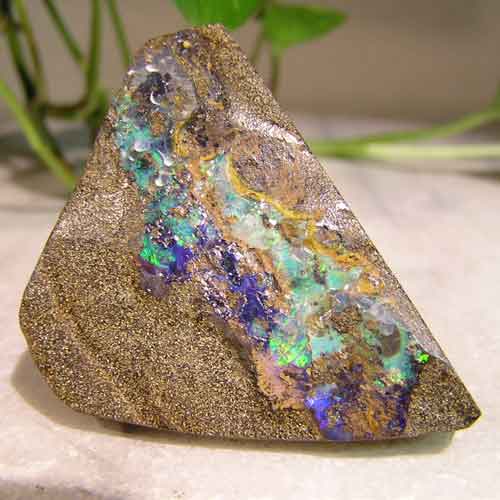
Precious opal shows a variable interplay of internal colors and even though it is a mineraloid, it does have an internal structure. At the micro scale precious opal is composed of silica spheres some 150 to 300 nm in diameter in a hexagonal or cubic close-packed lattice. These ordered silica spheres produce the internal colors by causing the interference and diffraction of light passing through the microstructure of the opal.It is the regularity of the sizes and the packing of these spheres that determines the quality of precious opal.
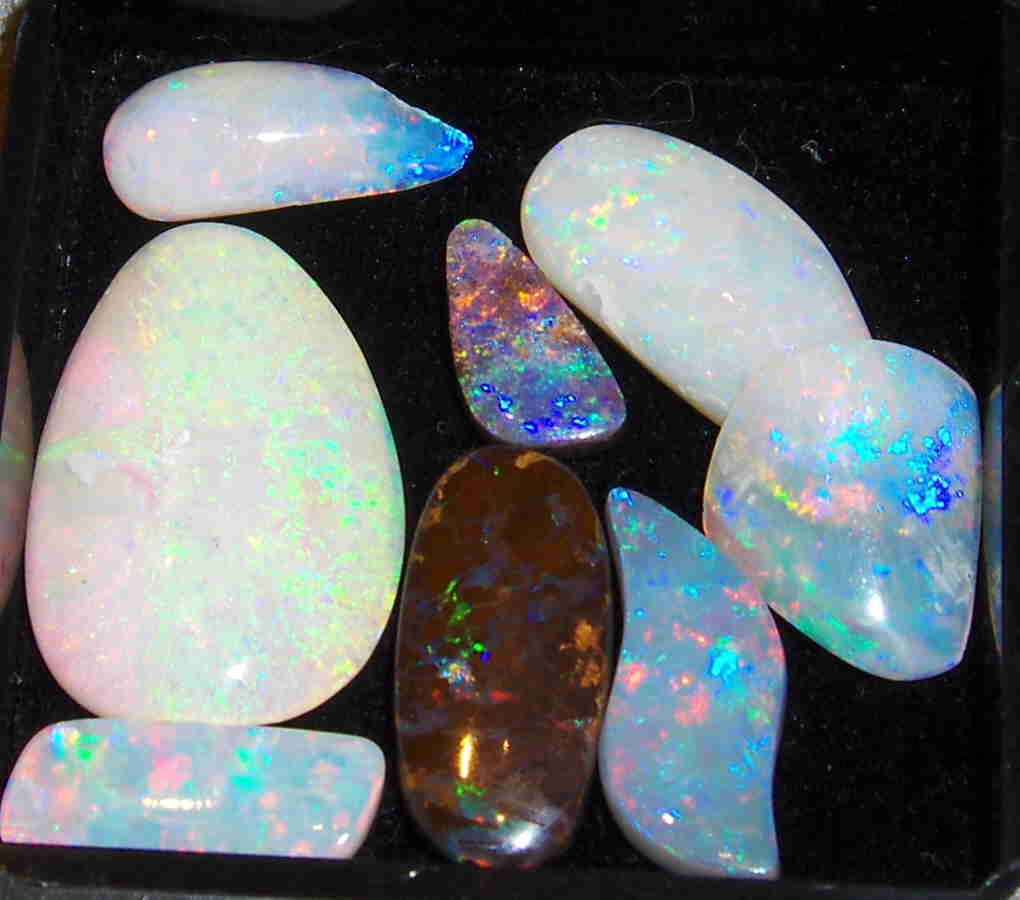
There are other types of common opal which display a play on color, such as the milk opal, milky bluish to greenish (which can sometimes be of gemstone quality), resin opal which is honey-yellow with a resinous luster, wood opal which is caused by the replacement of the organic material in wood with opal, menilite which is brown or grey, hyalite is a colorless glass-clear opal sometimes called Muller's Glass, geyserite, also called siliceous sinter, deposited around hot springs or geysers and diatomite or diatomaceous earth, the accumulations of diatom shells or tests.
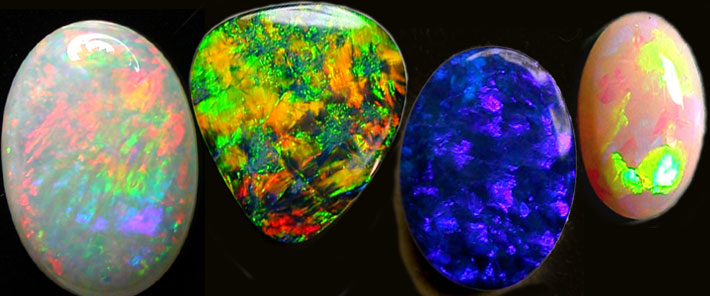
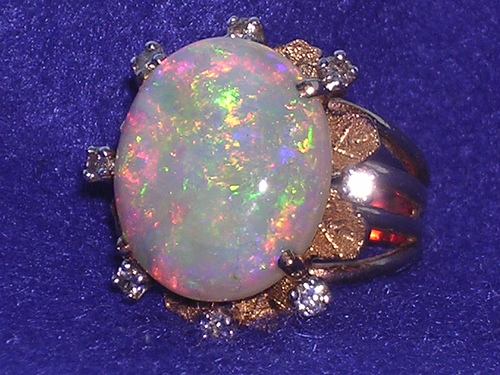
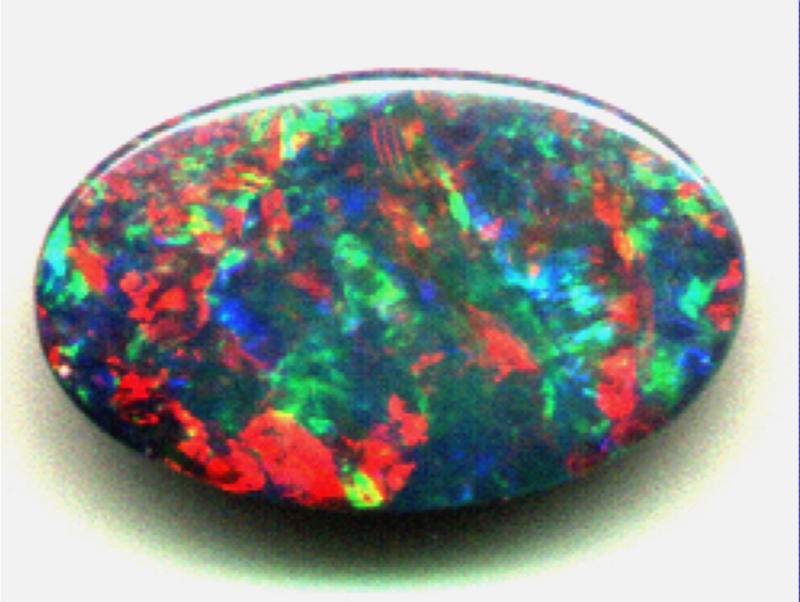 | 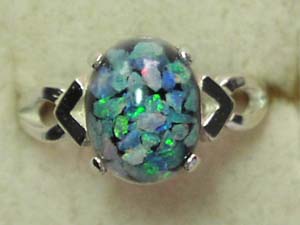 You can see that opal is found in a wide range of colors, which make each stone is uniquie.
 |
Video: Gemology of Precious Opal |
Video: Opal Mining Down Under |
